LEADER IN PRIMARY STANDARD CALIBRATION
How does Sierra calibrate mass flow instruments?
Every Sierra flow instrument is calibrated on a Primary Standard. Sierra does NOT use transfer standards. We cannot stress how beneficial this is to YOU as the end user! Our philosophy is that the purpose of a flow meter or controller is to transport an excellent calibration to the field. As a result, the accuracy of a flow instrument is only as good as it's calibration.
The reason other flow manufacturers do not calibrate on Primary Standards is because the cost to calibrate with a Primary Standard is very high. Primary standards are expensive to purchase and maintain and require more time to calibrate an instrument. However, it is the only way any a company manufacturing Mass Flow Meters & Controllers claiming accuracies of 1% or better can justifiably make such claims. Sierra has been around for nearly 40 years and has made substantial investments into the calibration facilities over the years. As a result, we have the unique ability to perform Primary Standard calibrations on every instrument and still offer very compeitive delivery lead times.
Many companies using transfer standards rely on specsmanship by stating that their accuracy is "at calibration conditions" or "at operating conditions." The statement may read, +/-0.8% of Full Scale (At Calibration Conditions). What this means is that the supplier only claims the accuracy while it is in their calibration lab and on their standard. Once it goes into the field, the accuracy is in question.
Learn about Primary Standards Sierra offers to customers that have +/- 0.35% and +/- 0.15% of reading accuracy.
Sierra lives by “The 4:1 RULE” , Others don’t!
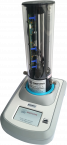
Sierra strictly maintains the ISO 17025 mandated, 4:1 ratio of propagated transducer uncertainties at every calibration step. That is, in a calibration accuracy propagation chain, the subject mass flow transducer (unit under test) can only be calibrated by a "standard transducer" that itself has an accuracy approaching one-fourth that of the unit-under-test. This level of commitment to flow measurement accuracy requires that Sierra base their metrology laboratory flow standards upon Primary Piston Provers with better than +/-0.2% of measured value accuracy that have been calibrated using NIST traceable measurements of every parameter involved. Sierra does this in order to drive the initial uncertainties to the minimum possible level. The only way to do this for measuring gas flow is to utilize a Primary Standard Piston prover. NIST refers to these systems as a PVTt system, meaning Pressure, Volume, Temperature and time.
As such, the Sierra "standard transducer" is a Primary Piston Prover. Sierra does not use nozzles, laminar flow elements or "secondary transfer standards" because the justification of the uncertainty would not support the claim of anything better than 1% uncertainty or "accuracy". What you get is a flow instrument calibrated using the best calibration system in the world. The reference to the classic four-to-one can be found many places at the NIST website at: NIST Home Page
Simple Questions Assure Quality!
Next time you are assessing the quality of the accuracy of a flow instrument ask the following questions.
· Q: What technology was used to calibrate it?
· A: Piston Provers are the only way to perform Primary Standard gas flow calibrations. Sierra uses Piston Provers.
· Q: Do you calibrate with a Primary Standard under the 4:1 rule where the standard must be at least 4X more accurate than the device under test?
· A: NIST references the classic 4:1 rule as the only way to achieve claimed accuracy. Sierra uses the 4:1 rule for every instrument calibrated.
Be aware of imitations, when you need accuracy statements you can trust, assure that your gas mass flow meter was calibrated on a primary standard piston prover.