 DOWNLOAD
As gas pressure drops in the gas pipeline network, the transportation capacity is reduced. Compressor plants are used to boost gas pressure back up to optimum operating levels. Monitoring fuel gas to compressors is typically accomplished with an orifice or turbine meter. 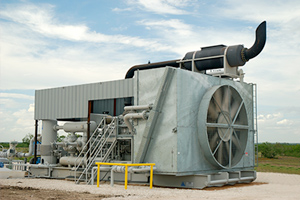 Because both of these methods are subject to fouling and failure, they require frequent skilled maintenance in order to provide an accurate measurement.
Because long straight pipe runs are difficult to find in these installations, varying flow profiles within the pipe degrade measurement accuracy. Furthermore, both the orifice and the turbine meter measure only volumetric flow. Additional pressure, temperature, and differential pressure sensors as well as a flow computer are required to calculate the mass flow rate. Installation and cost of those add-ons greatly increased instrument cost.
SIERRA’S SOLUTION
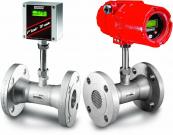
The process engineers were seeking an affordable, field-rangeable, low-maintenance, high-accuracy device and they found it in the FlatTrak® 780S.
The compressor station utilizes a portion of the natural gas in the storage facility or pipeline to power their equipment. Sierra’s FlatTrak 780S provided accurate cost-allocation, improved combustion efficiency, no moving parts (eliminates fouling and failure), and the integral flow straightener reduces straight run requirements.
The glycol dehydrator is used to remove water from the natural gas. The reboiler supplies the heat required to separate the glycol and water by distillation. In this operation, the 780S offers improved burner efficiency, provides built-in alarms to ensure efficiency and continuous process, and built-in conditioning improves accuracy and facilitates installation in constrained piping environments.
Line heaters are used at hundreds of pressure-reducing stations along the pipeline. Extreme pressure reduction causes gas temperature to drop. Critical liquid components of the gas will drop out if the line is not heated. The FlatTrak’s field-adjustment capabilities improve operational reliability and flexibility, and the no-moving parts design reduces maintenance requirements on remote equipment.
Here’s what makes the Sierra’s FlatTrak 780S an ideal choice:- Measures mass flow directly with one meter
- 100:1 turndown for accurate monitoring of peak and low flow situations
- In-line flow conditioning eliminates piping straight-run requirements
- Removable probe for easy cleaning
- Generates minimal pressure drop across the instrument