Go to Flow Division >
Filter products by:
-
Emissions / Analytical (6)
- Partial Flow Dilution System
- Raw Exhaust Flow Metering
- Intake Air Flow Metering
- Automatic Filter Changer
- PM Filters / Weigh Chambers
- Air Handling / Scrubbing
- Clear All
From R&D to certification, you're covered!
Emissions & Analytical Solutions
Sierra manufacturers the BG3 Elite Partial Flow Dilution system for use in diesel particulate sampling. BG3 Elite is a direct replacement to cumbersome full flow CVS systems in both heavy and light duty emissions applications. The BG3 Elite can feed properly conditioned diluted sample flow to a Bag Mini-Diluter for gaseous analysis or even to a Particle Number measurement device. Learn more...
- View by:
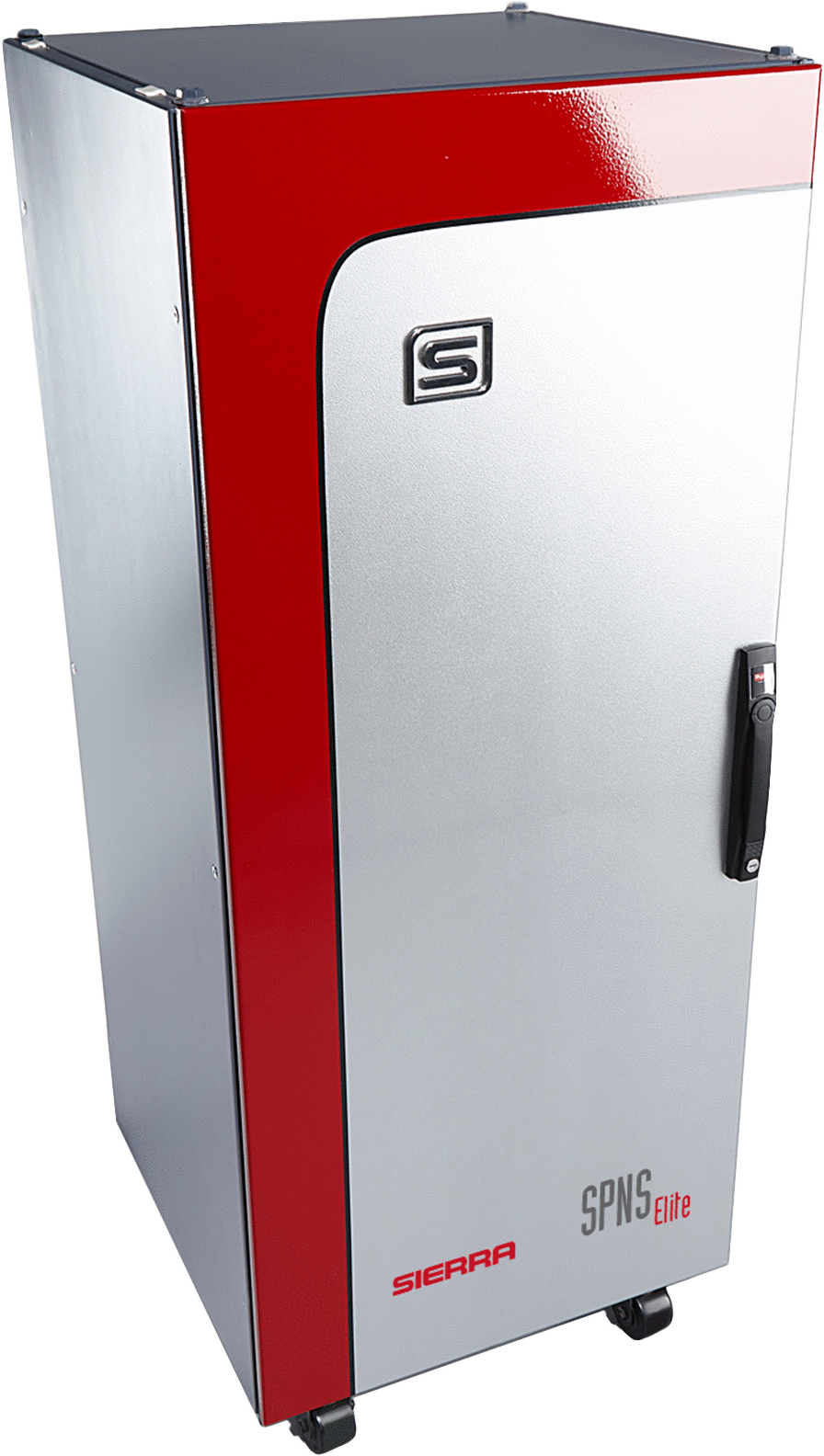
SPNS EliteTM
Solid Particle Number System
- UN-ECE R49 and R83 compliant
- Ideal for autos, diesels, pre/post aftertreatment, jet engines, and more
- Measures particulate concentration down to 23nm (10nm pending)
- Units calibrated independently by SwRI in their ISO-17025 lab
- Catalytic Stripper Technology (CST) Improves quantification of sub-23nm particles
- Takes a sample from a full-flow CVS unit or partial flow dilution system
BG3 Elite
Partial Flow Dilution (PFD) System
- Transient and steady-state sampling
- Use in place of CVS for emissions and analytical sampling
- Light-duty and heavy-duty engines
- Sample any size or type of engine and any fuel
- US EPA-approved for R&D and certification work
- BG3 with ExhaustTrak replaces full flow CVS for Light Duty- Learn more
- Made in the USA
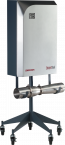
ExhaustTrakTM Venturi Flow Meter
Raw Exhaust Mass Flow Metering
- Go direct to the sample zone
- Patented pressure averaging rings for zero contamination
- Eliminating need for chemical mass balance methods
- Meets or exceeds US EPA 40 CFR Part 1065
- BG3 with ExhaustTrak replaces full flow CVS for Light Duty- Learn more
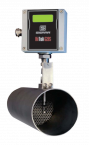
AirTrak 628S Flow Meter
Intake Air Mass Flow Metering
- 200 millisecond response time to changes in flow rates
- High accuracy 1.0% of full scale over a broad range
- Outstanding 100:1 turndown
- Minimal flow blockage and low pressure drop
- High accuracy at low idle conditions
- Field adjustment of critical flow meter settings
- Digital electronics, field calibration validation
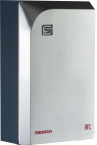
Automatic Filter Changer (AFC)
Making gravimetric PM emissions sampling easier, faster and safer!
- 14 and up to 24 filter puck canister capacity
- 10 second filter indexing time
- 2D filter barcode reader reads filter number during final indexing
- Plug-and-play with any BG3 partial flow system
- Meets US EPA 40CFR Part 1065 Regulations
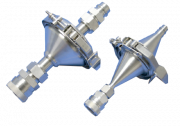
Particulate Filter Holders
47mm, 70mm, and 90mm
- We stock all filters and filter holder sizes
- Design meets requirements of Federal Register
- All filter holders are made of 316L stainless steel
- Plug-and-play with BG3 partial flow sampler
- Used in manual mode with other devices
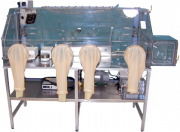
Filter Weighing Chambers
Assure High Quality Filter Media Processing
- Reduce/eliminate errors in filter weight data
- Dual chamber "Glove Box" style design
- Filter bar coding and scanning option
- Designed per regulatory requirements
- Compact ready-to-run package
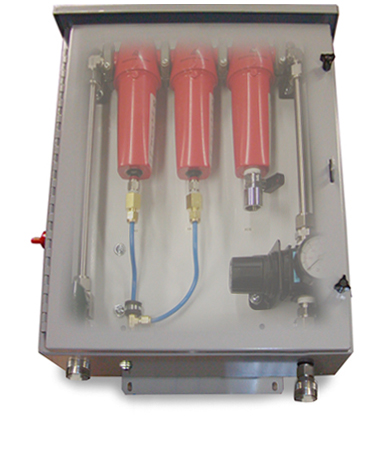
Assure clean dilution air during sampling
Air Handling and Scrubbing
- Eliminate dirt, water and oil from your air
- High quality air means high quality data results
- Custom systems available
We're sorry, your filter request has no results. Please try again.