 DOWNLOAD
The pressure on Mars is less than one percent of what it is on Earth. The research of the Controlled Environment System Research Facility (CESRF) at the University of Guelph in Ontario, Canada includes evaluation of plant growth under these low  pressures.
In their studies of biological life support for future space exploration, their experiments utilize eight closed-loop hypobaric chambers. Each of these chambers is equipped with three mass flow meters to flow carbon dioxide, oxygen, and nitrogen. Initially researchers used flow-tube style meters to control gas injection rates, but they could not provide the required accuracy under fluctuating temperature and pressure conditions.
SIERRA’S SOLUTION
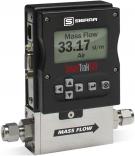
Sierra’s SmartTrak® 100 mass flow controllers were selected for their pinpoint accuracy and repeatability. The carbon dioxide mass flow measurement provided by the SmartTrak is used to calculate the rate of photosynthesis, and the oxygen and nitrogen flow controllers are used to maintain the partial pressures of those gases, as required by the experiments. Essentially, by changing specific parameters, such as light, CO2 concentration, pressure, and/or temperature, the rate of photosynthesis can be varied.
Dr. Michael Stasiak, a principle researcher at CESRF, says that accuracy is the greatest benefit of using the SmartTrak’s for low-flow gas delivery. “I have grown plants for 120 days in a sealed growth chamber, and the difference between the carbon added by the flow controller as carbon dioxide and the amount of carbon in the plants at the end of the experiment has been as little as five percent,” he says.
Here’s what makes Sierra’s SmartTrak 100 an ideal choice:- Patented, inherently linear Laminar Flow Element (LFE) design
- Provides smooth and flexible valve performance
- Pilot Module allows user to switch between ten pre-programmed gases, change setpoint value and source, set zero, span and full scale, modify engineering units, choose output signal...and much more
- Has more robust electronics than other industry mass flow controllers